
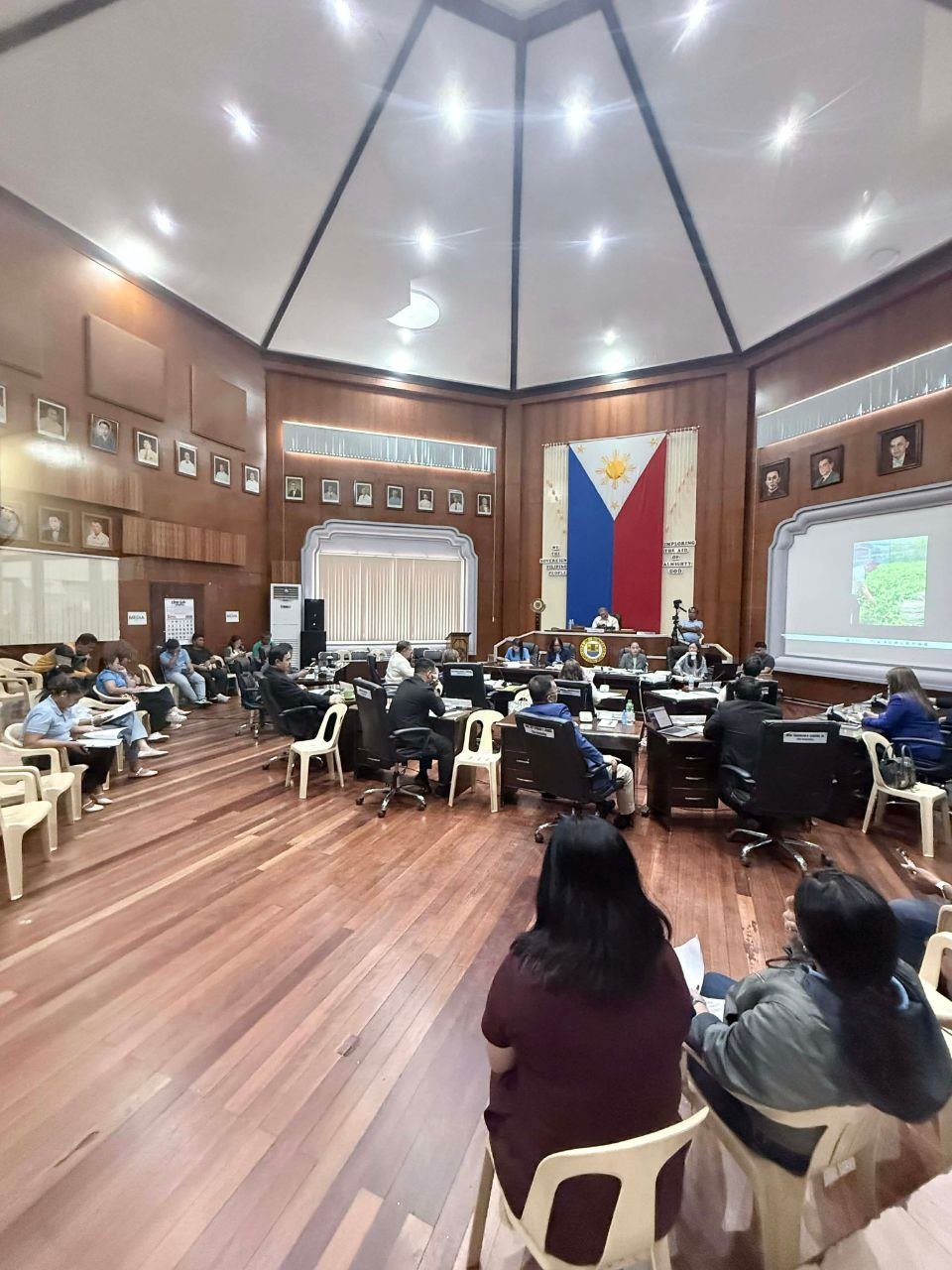
Dumaguete City lawmakers unanimously advanced Mayor Manuel “Chiquiting” T. Sagarbarria’s unprecedented ₱2.185-billion borrowing proposal during the April 29, 2026 session, marking a pivotal moment in the city’s financial history as the measure moves to committee deliberation.
The legislative body encountered no opposition when CDC Full Council Resolution No. 2026-42 cleared its first reading, setting the stage for detailed scrutiny of what represents one of the most substantial debt obligations ever considered by the local government. Today’s committee hearing at 2:00 PM in the Plenary Hall will examine the proposal’s financial, legal, and developmental ramifications before returning to full council debate.
The borrowing initiative aims to incorporate the multi-billion peso infrastructure package into Dumaguete’s CY 2026 Annual Investment Program (AIP), with funding sourced through negotiations with government depository banks.
₱2.185-Billion Infrastructure Package Details
Two major construction projects comprise the borrowing package, both targeting central barangays within the city. The principal component involves developing a four-storey Dumaguete City Public Market in Barangay Poblacion 3, carrying a ₱1.948-billion price tag.
The secondary project encompasses a twin two-storey City Hall Extension Building featuring integrated parking facilities in Barangay Poblacion 4, valued at ₱237 million. Mayor Sagarbarria’s formal request specifies that general fund borrowings will finance both developments, contingent upon council authorization for bank negotiations.
Unprecedented Financial Burden Analysis
For the recently reclassified second-class city, the ₱2.185-billion debt obligation represents an extraordinary financial undertaking. Dumaguete’s 2024 annual income reached approximately ₱1.218 billion, making the proposed borrowing nearly 1.8 times the city’s complete yearly revenue stream.
Using the Philippine Statistics Authority’s 2024 population count of 142,171 residents, the debt translates to roughly ₱15,369 per citizen. This borrowing also surpasses the city’s entire 2025 Annual Investment Program, publicly recorded at ₱1.4 billion.
Local officials have encouraged community participation in the proceedings, emphasizing the importance of public input on this generational financial decision affecting both the local government and residents.
Provincial Loan Controversy Creates Concerns
The mayor’s massive borrowing proposal emerges amid ongoing controversy surrounding provincial-level debt management, where his son, Negros Oriental Governor Manuel L. Sagarbarria, secured a ₱5.85-billion loan from the Land Bank of the Philippines and Development Bank of the Philippines in February 2024.
The 2024 Commission on Audit (COA) Annual Audit Report identified serious procedural violations in the provincial borrowing process, highlighting the absence of mandatory feasibility studies and cost-benefit analyses required under the Government Procurement Reform Act (R.A. 9184).
Auditors cautioned that the province’s ₱179.3-million annual amortization will consume nearly 30% of its 20% Development Fund, establishing a significant debt service burden that limits future administrative flexibility. Observers are monitoring whether the city’s ₱2.185-billion package will undergo proper feasibility and economic viability reviews that the provincial government omitted.
Regulatory Approval Process Ahead
Beyond council approval, the borrowing proposal must navigate multiple regulatory checkpoints before execution. Philippine local government finance regulations require the city to obtain a Certificate of Net Debt Service Ceiling and Borrowing Capacity from the Bureau of Local Government Finance (BLGF).
Additionally, the Department of Finance mandates a positive assessment from the Monetary Board of the Bangko Sentral ng Pilipinas (BSP) before loan agreement execution. The Local Government Code stipulates that annual debt service appropriations cannot exceed 20% of a local government unit’s regular income — compliance must be demonstrated before assuming the ₱2.185-billion commitment.
Rising Economic Pressures on Citizens
The borrowing initiative proceeds despite escalating economic challenges facing Dumaguete households. March 2026 headline inflation reached 4.1%, fueled by increases in transportation, housing, and utilities expenses.
Surging global oil prices recently prompted city government implementation of a local fuel-subsidy program in April, highlighting existing financial pressures on residents who would ultimately shoulder the proposed debt burden through future taxation and service fees.
Public Scrutiny Through Committee Process
Today’s 2:00 PM committee hearing at the Plenary Hall provides residents opportunity for direct participation, enabling them to observe deliberations and voice concerns before the city assumes this historic financial obligation.
The session will permit council members to evaluate the borrowing’s implications for fiscal sustainability, debt service capacity, and long-term financial flexibility. Anticipated discussion topics include repayment schedules, interest rates, and economic justification for both infrastructure developments.
Long-Term Fiscal Impact Considerations
Today’s hearing outcome will demonstrate the City Council’s commitment to thoroughly evaluating the balance between infrastructure modernization promises and long-term fiscal burdens affecting future administrations and constituents.
Financial experts observe that debt commitments of this scale typically extend 15 to 25 years, meaning current elementary students in Dumaguete may continue servicing these obligations upon entering the workforce. The decision effectively commits multiple future city administrations to substantial annual debt payments.
This borrowing proposal represents a defining moment for Dumaguete’s fiscal stewardship, as the city weighs infrastructure development goals against sustainable debt levels that maintain financial flexibility for future emergency responses and development opportunities.